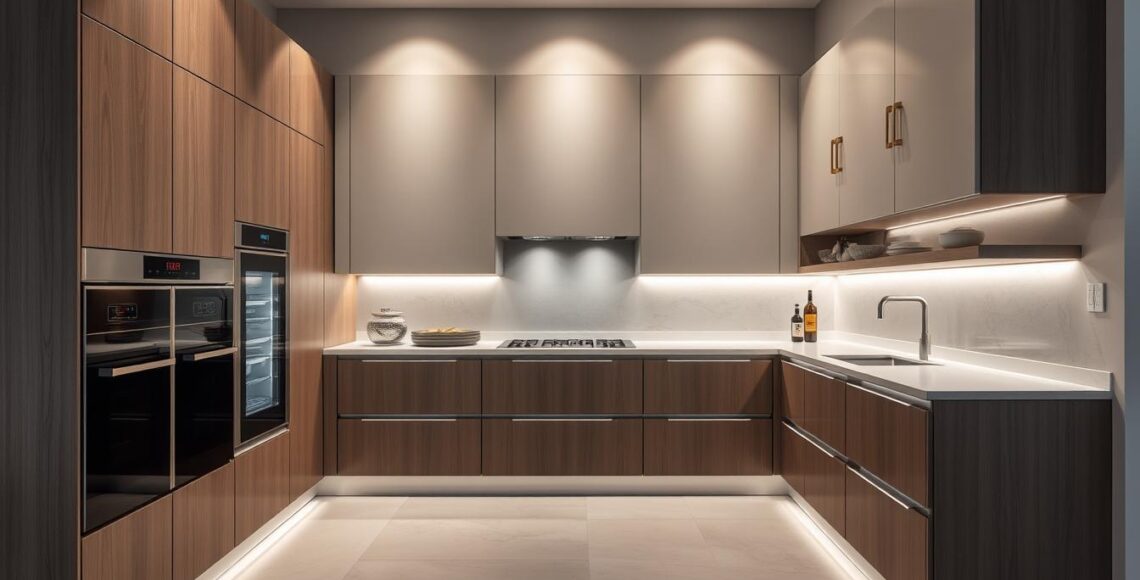
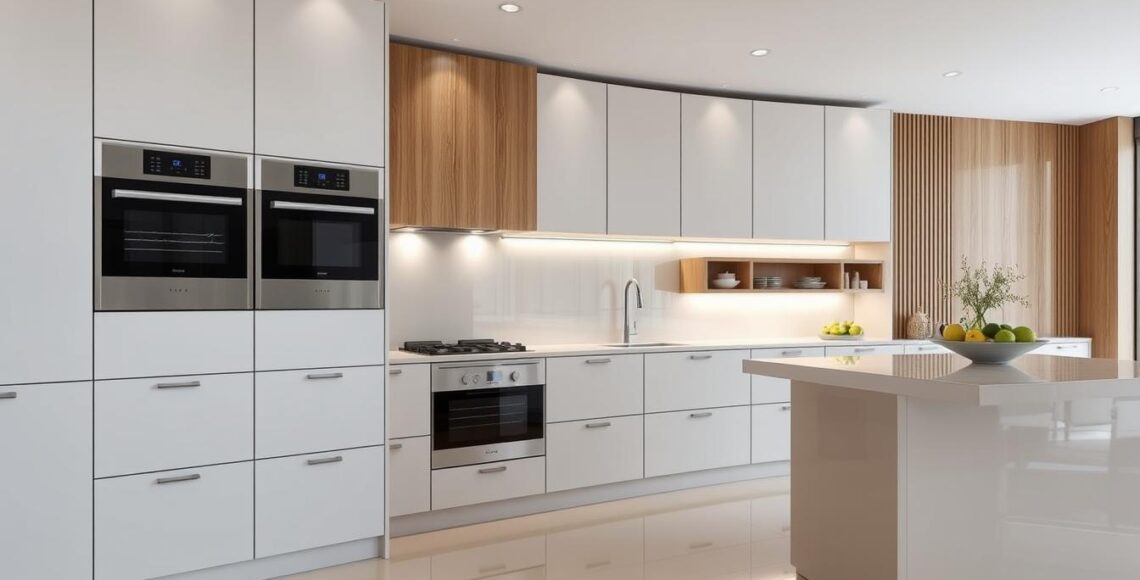
Seamless Integration: Making Built-in Appliances Disappear in High-End Kitchens
We think seamless integration is key in modern kitchen design. It’s important for a sleek and sophisticated look. Architects and contractors use panel matching and flush installation to create stunning kitchens for discerning homeowners.
Seamless integration is now a must in high-end kitchen design. We’ll look at how to make built-in appliances blend in, creating a clean look. Panel matching and flush installation are key to this, making the kitchen feel elevated.
Now, seamless integration is a must in high-end kitchens, not just a luxury. By mastering panel matching and flush installation, we make kitchens both beautiful and functional. We aim to bring architectural dreams to life, and seamless integration is key to this goal.
Understanding Built-in Appliance Design Fundamentals
Exploring high-end kitchen design, we find built-in appliances key. They boost kitchen function and look. We’ll look at hardware integration and ventilation design to make kitchens both useful and nice to look at.
Designing built-in appliances means thinking about how they fit in. Hiding them behind cabinets makes the kitchen look better. Choosing the right materials is also important. It affects how long the appliances last and how easy they are to clean.
Core Principles of Seamless Integration
To blend appliances into the kitchen, we focus on a few things:
- Hardware integration: making sure appliances fit with the rest of the kitchen
- Ventilation design: creating systems that work well and look good
- Material selection: picking materials that last, are easy to care for, and look good
The Psychology of Hidden Appliances
Hidden appliances make kitchens calm and clean. They reduce clutter, making the space feel bigger and more welcoming. Understanding this helps us design kitchens that are both useful and beautiful.
Planning Your Integrated Kitchen Layout
When designing an integrated kitchen layout, we focus on utility planning. This ensures the space is both functional and efficient. A well-planned kitchen layout can make workflow better and save costs.
Architects and contractors consider the kitchen’s workflow and traffic patterns. They design a layout that reduces clutter and boosts productivity.
To achieve this, we recommend the following tips:
- Assess the kitchen’s workflow and identify areas where built-in appliances can be seamlessly integrated
- Consider the placement of appliances, such as a built-in refrigerator, near cooking stations to reduce unnecessary movement
- Evaluate the kitchen’s traffic patterns and design the layout to minimize congestion
A key aspect of utility planning is balancing appliance placement with the kitchen’s aesthetic. This way, we create a space that’s both functional and beautiful. As we plan the integrated kitchen layout, we must also consider the specific needs of the users.
By carefully considering these factors and incorporating utility planning into the design process, we can create an integrated kitchen layout that is both efficient and beautiful. This meets the needs of architects, contractors, and homeowners alike.
| Design Element | Utility Planning Consideration |
|---|---|
| Appliance Placement | Proximity to cooking stations and workflow |
| Traffic Patterns | Minimizing congestion and optimizing movement |
| Storage Requirements | Assessing user needs and incorporating adequate storage |
Essential Components of Flush Installation
Flush installation is key for a seamless look in high-end kitchens. Precise alignment and managing gaps are crucial. Using techniques like laser leveling and precision cutting helps achieve a flawless finish.
Alignment techniques are vital for a successful flush installation. They ensure all components are properly aligned. This requires careful planning and attention to detail.
Panel Matching Techniques
Panel matching techniques are also vital. They involve selecting panels that match the surrounding surfaces. This creates a cohesive and streamlined appearance.
Gap Management Strategies
Gap management strategies prevent errors and ensure a smooth installation. They involve measuring and managing gaps between components. This ensures a precise fit and a seamless look.
Surface Alignment Methods
Surface alignment methods are critical for a seamless look. They involve using techniques to ensure surfaces are properly aligned and secured. This creates a flawless finish that enhances the kitchen’s aesthetic.
Mastering Hardware Integration
In the world of high-end kitchen design, hardware integration is key. It helps create a seamless look. Architects and contractors choose hardware that matches the cabinetry for a cohesive, sophisticated look.
Concealed hinges, for example, offer a clean, minimalist look. They also make the kitchen more functional.
Our team is skilled in hardware integration. We guide on how to blend hinges and handles for a unified look. Here are some best practices:
- Choose hardware that matches the cabinetry for a seamless look
- Use techniques that hide hardware for a clean look
- Pick durable, easy-to-maintain hardware for a long-lasting kitchen
By mastering hardware integration, we make kitchens both functional and beautiful. As we explore new kitchen designs, hardware integration is crucial for a seamless look.
We help architects and contractors create stunning kitchens. Our guidance on hardware integration ensures a cohesive, sophisticated look. This makes the kitchen both functional and visually appealing.
Ventilation Solutions for Seamless Designs
Proper ventilation is key for a healthy and safe kitchen. We focus on ventilation design to make it look seamless. This means we aim for good airflow and hide the vents.
Our method includes hidden exhaust systems for better airflow and less noise. We also use integrated cooling solutions and airflow optimization techniques to improve the design.
Key Considerations for Ventilation Design
- Airflow and ventilation rates
- Noise reduction and sound absorption
- Energy efficiency and sustainability
By focusing on these points, we make kitchens that look great and work well. They are safe, healthy, and functional.
Custom Panel Selection and Implementation
Custom panels are key to a high-end kitchen’s look. We suggest picking panels that match the cabinetry for a unified look. This way, architects and contractors can make sure the panels fit right in.
Custom panels can make a kitchen look better and work better. For example, panels that match the cabinetry make the kitchen look seamless. They also make the kitchen last longer. Important things to think about when choosing custom panels include:
- Material matching: Picking panels that match the cabinetry.
- Panel attachment systems: Making sure the panels are well attached to the cabinets.
By following these tips, architects and contractors can make a kitchen that looks great and works well. Custom panels can really enhance the kitchen’s look and feel.
Smart Technology Integration Strategies
As we explore new ideas in high-end kitchens, smart technology integration is key. It makes our kitchens more useful and fun to use. This is thanks to smart tech.
Smart tech aims to make our kitchens easy to use. This means using voice-controlled appliances and smart lighting. For example, smart home devices can connect with kitchen gadgets. This makes our kitchens work together smoothly.
Here are some ways to add smart tech to your kitchen:
- Look at your kitchen’s layout to see where tech can help
- Choose appliances and devices that work with smart homes
- Make sure the controls are easy to use
Using these strategies, we can make kitchens that are both beautiful and high-tech. Smart tech will keep changing kitchen design for the better.
Maintenance Access Planning
Creating seamless integration in high-end kitchens is key. We focus on maintenance access to ensure built-in appliances last long. This planning makes kitchens functional and efficient, with minimal disruption.
We design service points for easy access, allowing for quick maintenance. This includes strategic placement of removable panels. These panels improve access and add a clean, minimalist look. Our design makes kitchens both functional and beautiful.
Service Point Design
A well-designed service point is crucial for built-in appliances. We consider the appliance’s location and create accessible panels. This ensures maintenance is convenient and efficient.
Removable Panel Systems
Removable panel systems are a big part of our plan. They make accessing built-in appliances easy, making maintenance simple. These systems keep kitchens looking good while being functional.
By focusing on maintenance access, we make high-end kitchens both beautiful and practical. Our use of service point design and removable panels ensures appliances are easy to maintain. This makes repairs straightforward.
Lighting Considerations for Integrated Appliances
When designing a high-end kitchen, lighting is key. We focus on both function and beauty. Good lighting makes the kitchen look great and work well.
We look at the kitchen’s needs, like the appliances and countertops. This helps us plan lighting that fits perfectly. We aim to make the appliances blend in.
Task Lighting Solutions
Task lighting helps with visibility and comfort. We use under-cabinet lights, pendant lights, or LED strips. These options are designed to be hidden, matching the kitchen’s look.
Ambient Light Integration
Ambient lighting sets the kitchen’s mood. We use recessed lights, ceiling fixtures, or floor lamps for this. It creates a cozy feel. Balancing task and ambient lighting makes the kitchen work and look good.
Our design includes careful lighting to make the kitchen stunning. We aim to merge design dreams with real-world solutions. Lighting is a big part of this.
Common Integration Challenges and Solutions
When designing high-end kitchens, we often face integration challenges. These can be solved with careful planning and execution. Understanding these challenges helps us find effective solutions for a seamless look.
Common issues include inconsistent design elements, insufficient space, and incompatible materials. To tackle these, we use a phased installation approach. This method improves workflow, reduces errors, and creates a clean look. It’s perfect for high-end kitchens.
Here are some strategies for overcoming integration challenges:
- Conduct thorough design planning to ensure consistency and cohesion
- Measure and assess the space to determine the best layout and installation approach
- Select materials that are compatible and complementary to the overall design
By using these strategies, we can make kitchens that are both functional and beautiful. Overcoming challenges requires precision and expertise in our design and installation.
With careful planning and execution, we can solve integration challenges in high-end kitchens. By focusing on both functionality and aesthetics, we create spaces that are beautiful and meet our clients’ needs.
Conclusion: Creating Your Perfect Integrated Kitchen Space
Creating the perfect integrated kitchen starts with seamless appliance integration. This blend of form and function makes the kitchen a home’s centerpiece. Through the strategies shared, architects and contractors can make kitchens that look great and work well.
The secret to seamless integration is careful planning and precise work. Designers use panel matching, flush installation, and hardware integration to create a unified kitchen. This attention to detail makes the kitchen look effortless and enhances its beauty.
The goal of seamless integration shows the connection between design and manufacturing. This approach allows for kitchens that impress and improve daily life. It’s about creating spaces that are not just functional but also beautiful.