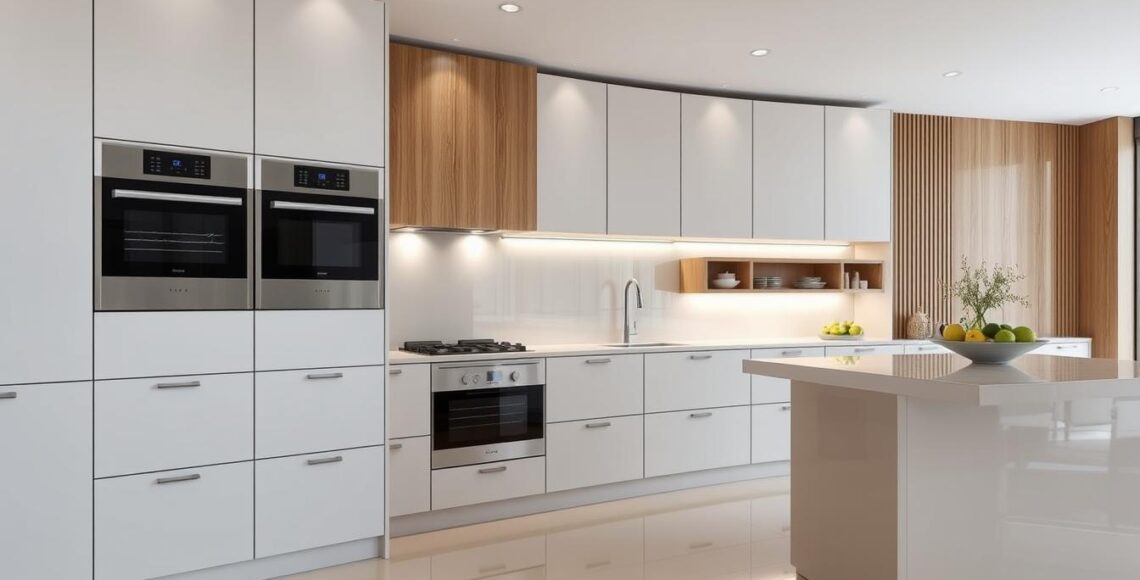

Seamless Technology: Integrating Smart Home Systems into Millwork
We aim to connect architectural dreams with real-world manufacturing. This is why we’re diving into smart home integration and its role in modern millwork. It’s key to improve a space’s look and function. System concealment is crucial for this seamless tech.
Exploring smart home systems, we see how tech integration fits into millwork without losing design. Our mission is to offer top-notch custom cabinetry that goes beyond what clients expect. System concealment is a big part of this.
By focusing on tech integration and hiding systems, we make spaces that work well and look great. Our team is all about giving expert advice and help. We make sure our clients get the best for their smart homes.
Key Takeaways
- We specialize in bridging architectural vision with manufacturing reality through precision and expertise.
- Tech integration is essential for enhancing the overall aesthetic and functionality of a space.
- System concealment plays a vital role in achieving seamless technology.
- Our goal is to provide high-end custom cabinetry manufacturing solutions that meet and exceed our clients’ expectations.
- We focus on creating spaces that are both functional and visually appealing.
- Our team is dedicated to providing expertise and guidance throughout the process.
Understanding Smart Home Integration in Modern Millwork
Smart home integration is key in modern millwork, making homes more functional and comfortable. Our team focuses on accessibility design and cooling solutions for a seamless smart home system.
Designing smart homes involves several important steps. These include:
- Understanding the client’s needs and preferences
- Choosing the right smart home devices and systems
- Making sure accessibility design is a priority for easy use
- Using effective cooling solutions for top system performance
By taking a comprehensive approach, we make homes comfortable, functional, and energy-efficient. Our goal is to innovate in millwork, delivering high-quality and precise work in every project.
We stay updated on the latest trends and best practices. This helps us offer our clients the best smart home solutions. Whether it’s accessibility design or cooling solutions, we aim to meet each client’s unique needs, setting a new standard in smart home integration.
Essential Planning Considerations for Technology-Enhanced Millwork
When planning for technology-enhanced millwork, cable management is key. A good cable management system boosts both looks and function. Our team will help design a system that fits each project’s needs. This way, all cables and wires are hidden but easy to find when needed.
Important points for cable management include:
- Looking at the cable needs for each project
- Creating a system that looks good and works well
- Making sure cables and wires are labeled and tidy for upkeep and fixing
By focusing on cable management, we make millwork that looks great and works well.
Our team is dedicated to helping at every step. We aim for top quality and craftsmanship in every project.
Design Principles for Concealed Technology Solutions
Integrating technology into our homes should be seamless and useful. Concealed technology solutions help us hide equipment and cables while keeping them accessible. Good equipment housing is key, as it hides devices and ensures they don’t overheat.
We look at many things to get a good look, like what materials to use and how to arrange the space. Choosing materials that match the area and planning the space well helps create a beautiful and useful room. Important things to think about include:
- Material selection for optimal performance and durability
- Space planning to ensure accessibility and ease of maintenance
- Aesthetic integration techniques to conceal technology while maintaining a visually appealing environment
Using these design rules, we make homes that are both useful and lovely. Our team helps architects and contractors find this balance. We offer custom solutions that fit each client’s needs.
Advanced Cooling and Ventilation Strategies
Exploring advanced cooling and ventilation strategies is key. It’s important to think about maintenance access. A good system makes it easy to maintain and fix, keeping it running well. Our team will help design and set up cooling and ventilation that fits each project’s needs.
Important things to consider include:
- Good airflow and ventilation to avoid overheating and moisture
- Energy-saving options that are good for the environment
- Working with smart home systems for easy control and monitoring
By focusing on maintenance access and these points, we can make cooling and ventilation better. This improves a building’s performance and makes it more comfortable for people. We aim to offer solutions that are just right for each project, ensuring our clients get the best results.
We’re proud of our knowledge and dedication to quality at our company. Our team will work with you to create cooling and ventilation that suits your needs. With our help, your project will get the care and attention it needs, leading to a great outcome.
Professional Cable Management Solutions
Exploring professional cable management shows how key tech integration is. It makes our living spaces smooth and useful. Our team focuses on designing systems that fit each client’s needs. We use techniques to hide cables and keep areas tidy.
There are important things to think about in cable management. These include:
- Wire routing: This means planning where wires go to hide them and avoid damage.
- Power distribution: A good power system is vital for all devices to work right.
- Future-proofing: We plan for new tech needs to make systems that grow with you.
We tailor our cable management to each client’s needs. Our mix of tech skills and hiding cables makes spaces look great and work well. We aim to keep improving and meet our clients’ high standards.
| Service | Description | Benefits |
|---|---|---|
| Cable Management | Customized cable management solutions | Improved functionality, reduced clutter |
| Wire Routing | Expert wire routing and placement | Minimized visibility, reduced risk of damage |
| Power Distribution | Well-designed power distribution systems | Proper powering of devices and appliances |
Equipment Housing and Access Point Design
When designing equipment housing and access points, we focus on accessibility design and cooling solutions. A good system makes maintenance easy. This ensures the system works well and efficiently.
Our team helps design equipment housing and access points for each project. We aim to make systems that are both functional and easy to maintain. Accessibility design is a big part of this.
Important things to think about include:
- Where to place components
- Features for easy maintenance
- Cooling to avoid overheating
By thinking about these, we make systems that are efficient, reliable, and simple to keep up.
We want to help architects and contractors. We aim to support them in creating custom cabinetry solutions that fit their needs.
System Integration and Control Interface Solutions
We know how key seamless system integration and control interface solutions are. They make a smart home system work well together. Good cable management ensures all parts work smoothly, giving users a great experience.
Our team will help design a system that fits your needs. We’ll use the latest trends and best practices. This includes planning and doing cable management to keep things tidy and easy to maintain.
- Scalability and flexibility for future upgrades and expansions
- Intuitive control interfaces that are easy to use and navigate
- Robust security measures to protect the system from unauthorized access
By focusing on cable management and system integration, we make smart homes that are not just useful. They also look good and are easy to use.
Maintenance and Upgradeability Considerations
When we talk about smart home integration, maintenance and upgradeability are key. A good system should be easy to maintain and upgrade. This ensures it works well and lasts long. Equipment housing and ventilation design are crucial here.
They protect the system and keep it cool. This helps it run at its best.
Keeping the system in top shape is important. We need to check the equipment housing and ventilation regularly. This helps catch problems early and saves money and time.
Some important maintenance tasks include:
- Inspecting equipment housing for damage or wear
- Checking ventilation design for blockages or inefficiencies
- Updating system software to ensure compatibility and security
Keeping the system updated is also key. This keeps it secure and running smoothly. We should also be able to quickly find and fix problems.
In short, taking care of our smart home systems is essential. By focusing on equipment housing, ventilation, regular checks, updates, and quick fixes, we can enjoy a smooth and reliable experience.
| Maintenance Task | Frequency | Importance |
|---|---|---|
| Equipment housing inspection | Quarterly | High |
| Ventilation design check | Bi-annually | Medium |
| System software update | Monthly | High |
Conclusion: Creating Future-Ready Smart Home Integration
As we wrap up our look at smart home integration in millwork, it’s clear that keeping things simple and tech-friendly is key. Our team has shared the latest trends and best practices. We’ve shown how a well-designed system can meet homeowners’ changing needs.
The world of smart home tech is always changing. It’s important to think about how our designs will hold up in the future. By focusing on easy access and flexibility, we make sure our clients’ systems stay current and useful. This way, we create homes that are not just smart but also comfortable and functional.
As we look ahead, let’s keep exploring new ways to make smart homes better. We should aim for homes that look great and work even better. Together, we can make living spaces that blend technology and design perfectly, improving our lives in every way.
FAQ
How can tech integration and system concealment enhance the overall aesthetic and functionality of a space?
At our company, we focus on making technology invisible in your space. We hide smart home systems in the millwork. This makes your space look better and work better, blending tech with design.
What are the current industry standards and best practices for smart home integration in modern millwork?
The millwork industry has changed a lot with new tech. Our team keeps up with the latest trends. We make sure our solutions fit your needs, from accessibility to smart home systems.
How can a well-designed cable management system enhance the overall aesthetic and functionality of a space?
A good cable management system makes your space look neat and work well. Our experts help plan and set up a system that hides cables but keeps them easy to reach.
What design principles should be considered for concealed technology solutions in millwork?
When hiding tech, think about looks, materials, and space planning. Our team shares the latest design tips. We focus on creating systems that meet your specific needs.
How can advanced cooling and ventilation strategies ensure the long-term performance and reliability of smart home systems integrated into millwork?
Keeping smart home systems running well is key. Our team advises on cooling and ventilation. We focus on easy maintenance and efficient system operation.
What are the key considerations for professional cable management solutions in technology-enhanced millwork?
Good cable management is vital for a smooth space. Our team offers insights on wire routing and power planning. We ensure tech integration is done right.
How can equipment housing and access point design contribute to the overall accessibility and performance of smart home systems in millwork?
Proper design of equipment housing and access points is crucial. Our team helps with component placement and maintenance access. We focus on accessibility and cooling solutions.
What are the key considerations for developing effective system integration and control interface solutions?
Seamless integration and easy control are key for a great smart home experience. Our experts share the latest trends. We focus on cable management for a smooth integration.
How can maintenance and upgradeability considerations enhance the long-term viability of smart home integration in millwork?
Keeping smart home systems up to date is important for their long life. Our team guides on maintenance and updates. We emphasize design for easy access and troubleshooting.